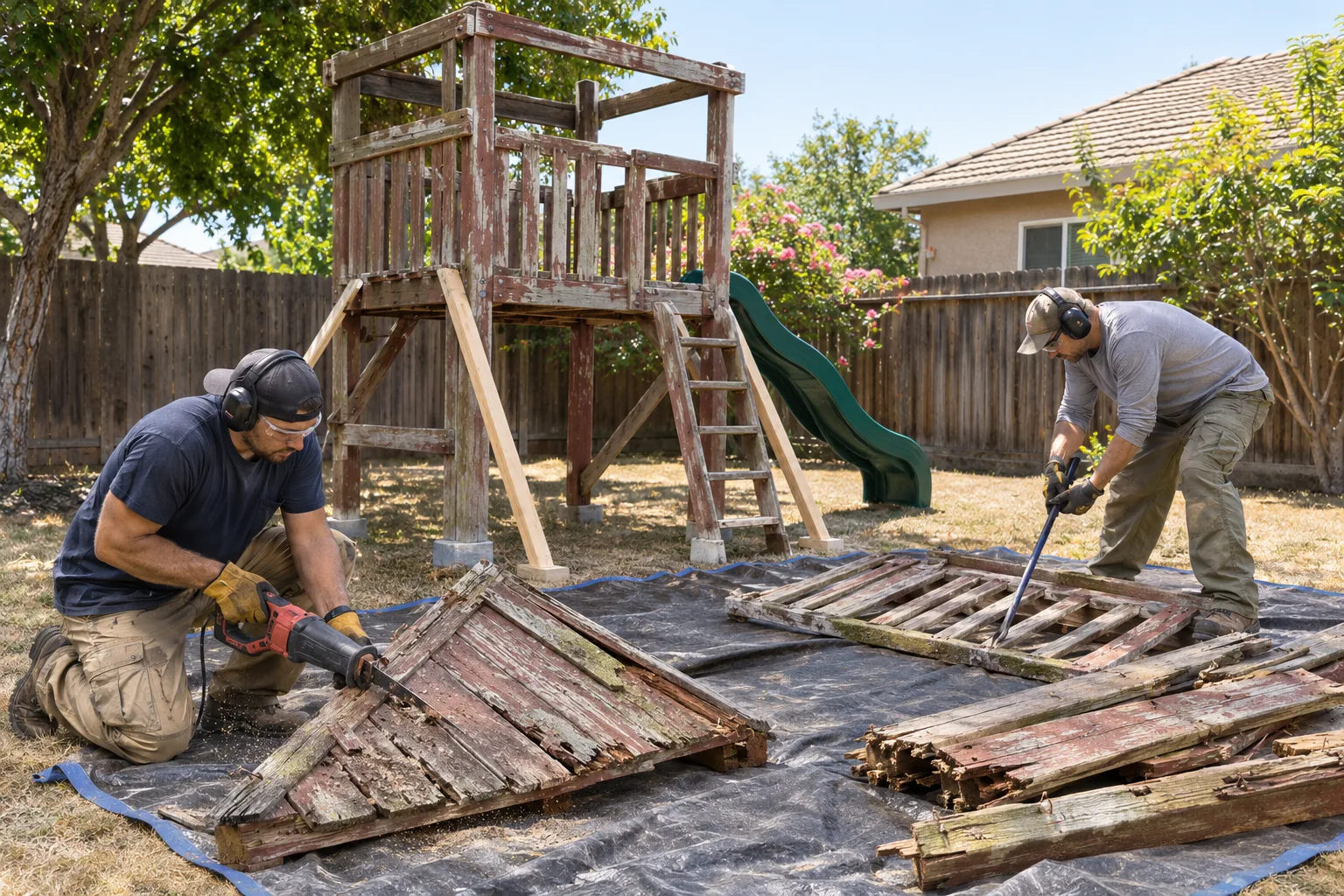
Demolition is planned around stability, exclusion zones, ground protection, manageable piece size, and debris containment. It does not mean uncontrolled collapse.
When this service fits
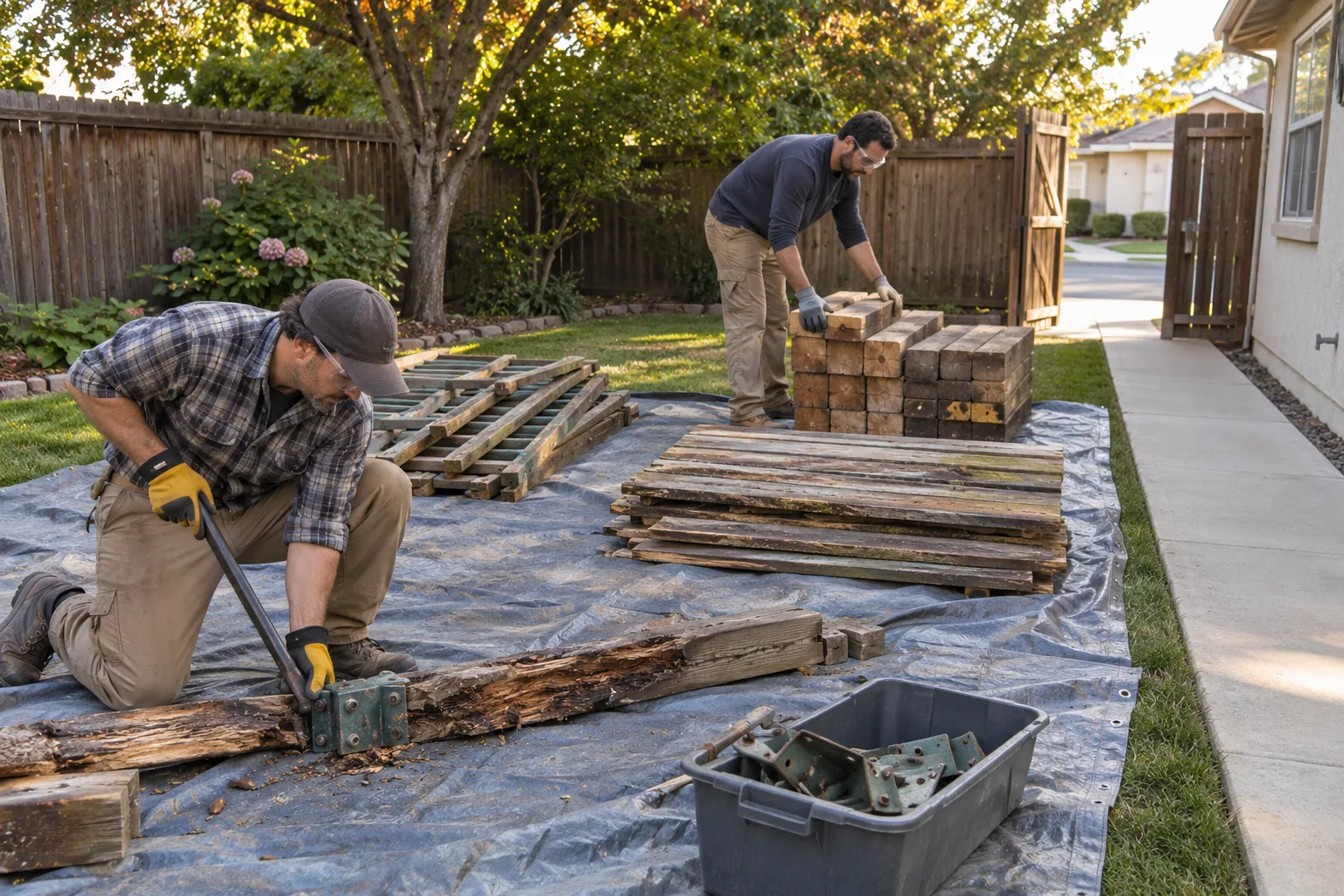
- Rotten or splintered structural lumber
- Corroded bolts and seized connectors
- Unsafe sections that cannot be carried intact
How the work is planned
The structure is assessed for load paths and weak points, then reduced from safe, accessible sections. Work proceeds at ground level where practical, with sharp hardware and splintered material contained as it comes down.
Prepare the property
Keep the surrounding yard clear and identify irrigation, utilities, pavers, retaining edges, and landscaping that need protection.
Estimate factors
- Structural condition and instability
- Cutting and separation required
- Sharp or splintered debris volume
- Anchors and concrete
- Protection for lawn, paving, and nearby structures
Service boundaries
Removal when damaged material, seized hardware, rot, or access favors controlled reduction rather than preservation. Hazardous material, unknown utilities, structural repairs, landscaping restoration, reinstallation, and work outside the agreed playset scope require separate confirmation.
Playset Demolition questions
Is demolition faster than dismantling?
Sometimes, but condition, access, anchors, and cleanup can matter more than the label. The estimator should choose the safer workable method.
Will debris be left in the yard?
Confirm the hauling and debris-removal scope in writing. The page does not assume every ground material or footing is included.
Can you demolish beside a fence or wall?
Tight clearances need photographs and measurements so the work zone and protection plan can be assessed.
Check the published service-area directory or prepare the facts for an estimate call.